Nursing Dissertation - 10 Steps Guide to Streamline Your Writing Journey
Author: Freya Leo
Table of Contents
- Step 1: Pick a Relevant Topic
- What Are the Best Dissertation Topics?
- Step 2: Write a Compelling Research Proposal
- Step 3: Time Management is Essential
- Step 4: Create an Outline
- Step 5: Conduct Extensive Research
- Step 6: Start Drafting the Dissertation
- How to Create a Title Page:
- How to write an Abstract?
- Acknowledgement Section
- How to Write an Introduction?
- Literature Review: How to Write One?
- How to Write a Methodology Chapter?
- Which is the best method for conducting research for a dissertation?
- Nursing Dissertation Conclusion and Recommendation
- Step 7: Add References
- Step 8: Edit and Proofread
- How to edit and proofread the dissertation?
- Step 9: Seek Feedback
- Step 10: Hire Professionals
|
According to the research, around 74.2% of nursing PhD students complete their degree, while around 22.7% drop out with an average completion time of 5.7% years. It is because of the rigorous coursework, trouble in time management and difficulty with writing. |
Hey nursing students, are you embarking on the journal of nursing writing but have no clue where to start?
No problem! Let us help you out!
Writing a nursing dissertation can feel overwhelming. Between juggling clinical placements, coursework and personal responsibilities, nursing students often struggle to carve out time for research and writing.
However, do remember that your dissertation is more than just an academic requirement; instead, it is a chance to showcase your ability to analyse healthcare problems, propose solutions and contribute to the nursing profession.
Students working on this dissertation find it hard because of its extensive research, time management and writing.
But not anymore, as in this guide, we will break down the process of dissertation writing into 10 practical steps to help you streamline your journey.
So, whether you are just starting or stuck halfway through, these steps will bring clarity and build momentum for the dissertation.
Come on! Let’s get started!
What Are The 10 Steps for Writing a Nursing Dissertation?
Wondering what the 10 steps are for writing a nursing dissertation? Well, getting words on paper is not enough. You need to work on it consistently and follow the right structure. Here are the top 10 tips for writing the dissertation. They include:
- Choose a compelling topic
- Write a research proposal
- Manage time effectively
- Create an outline
- Conduct Extensive Research
- Start Drafting The Dissertation
- Add References
- Edit and Proofread
- Seek Feedback
- Hire Professionals
Come on! Let’s dive deep into these tips.
Step 1: Pick a Relevant Topic
|
On average, one in three nursing students struggles to finalise a dissertation topic because of the broad scope of healthcare issues. |
Choosing the dissertation topic is the first thing you have to do before you even start working. Think of it as a foundation that helps set the tone for the rest of the work.
However, picking a topic is not as easy as it sounds, as with so many things to discuss, it can be difficult for students to choose the right one.
Moreover, not every topic is perfect for writing a dissertation. So, now you must be wondering what to do?
Well, here are some tips for choosing the best topic
- Always read your instructions and see what you need to cover in the dissertation.
- Furthermore, make a list of topics that sound engaging and then choose from them.
- Also, ensure that the topic you select is easy to write about, engaging, and reliable.
- Conduct research on the topics you have selected to ensure that you can find all reliable information.
- Additionally, look for those topics that have future scope in the market.
|
A Pro Tip: Consult with your supervisor to select a topic. Also, before you start working, do get it approved by them. |
What Are the Best Dissertation Topics?
Still have no clue what are the best dissertation topics in 2025 that you can talk about? No worries! Here are the best ones:
|
Step 2: Write a Compelling Research Proposal
|
A study suggests that research proposal rejection is quite higher because of either funding issues, irrelevant topics and lack of research. |
Before you dive into dissertation writing, many nursing programs require you to write a compelling research proposal.
However, it is not that easy, as many students get rejected on their first try. Therefore, you have to be very careful. Here are some things that you need to include in your proposal:
- Research question and objectives.
- Rationale for the study.
- Literature context.
- Methodology outline.
- Ethical considerations.
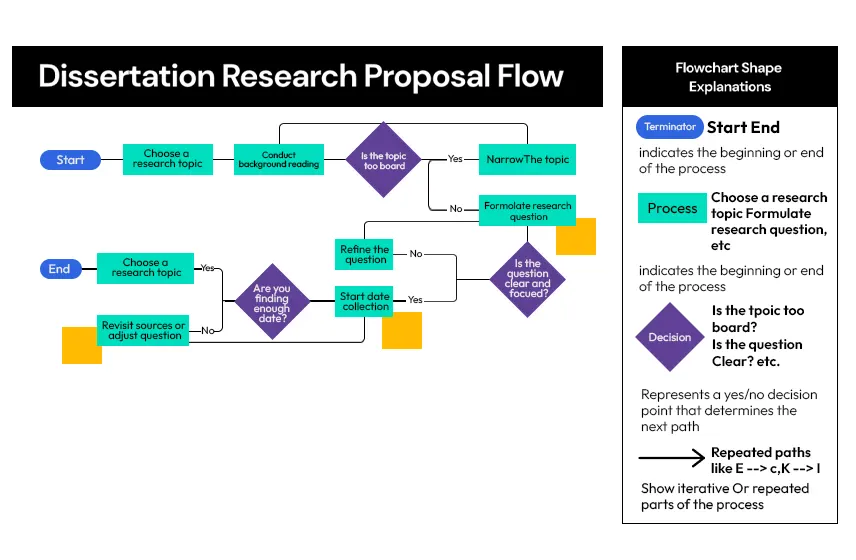
Here are some tips that can help you craft a solid research proposal:
- Start by outlining all the details that you want to include in the dissertation.
- Furthermore, introduce your topic and tell the reason why you have selected it.
- Also, provide main objectives, methods of conducting research, discussions and results.
- Moreover, don’t forget to highlight what your study aims to find.
- Once you are done, make sure your research proposal is well-written and plagiarised.
|
A Pro Tip: if you are having trouble writing the research proposal, consider connecting with the Nursing Dissertation Help services. They have expert writers who can help you craft a solid proposal that will be accepted on the first attempt. |
Step 3: Time Management is Essential
|
A study reveals that 78% of students in general struggle with time management. And since a dissertation is a complex project, it makes it even more difficult for them to complete it on time. |
Nursing dissertation writing is not easy. Instead, it is a lengthy and complex task which sometimes makes students want to put their heads through the wall. Fortunately, you can overcome this problem through some time management tips.
They include:
- Break your tasks into manageable chunks and allocate a deadline for each.
- Be consistent throughout the research and writing process.
- Furthermore, start as soon as possible to meet your deadlines effectively.
Step 4: Create an Outline
When it comes to writing the dissertation, outlining is essential. Think of it as a roadmap that helps readers navigate through your content. Furthermore, it even allows you to track progress and ensure you have covered all the essential points.
Here is a detailed outline of the dissertation:
|
Pre-Chapters
Core Chapters
Post-Chapters
|
We will discuss these chapters in more detail later on.
Step 5: Conduct Extensive Research
|
Nursing research databases, such as PubMed, CINAHL, and Medline, provide access to millions of peer-reviewed articles. Thus, this makes them essential for a strong literature review. |
The next step to streamline your nursing dissertation journey is to conduct extensive research. Think of it as a strong building block that helps you set the tone for the research work.
Hence, here is what you need to do:
- Dive deep into research resources, such as case studies, research papers, and scholarly articles.
- Furthermore, identify the gap between existing and new information.
- Jot down the crucial information that you need to include in your dissertation.
- Make sure to use the peer-reviewed articles as they are credible and can help you craft a solid dissertation.
- Focus on organising your sources, as it will help you with the references later on.
Step 6: Start Drafting the Dissertation
|
The average dissertation length is between 10,000 to 15,000 words, depending on the university and program level. |
Well, here comes the main part: DRAFTING YOUR DISSERTATION!
Buckle up, it is going to be a long journey. Find a quiet place where you can work peacefully.
Furthermore, organise your sources and writing tools so that you can focus without having to stand up every few minutes. Remember the outline we mentioned above? Well, you have to follow exactly that. Maintain clarity and convey your thoughts in a concise manner. Additionally, use the transition words and ensure your sentences connect with each other.
Now the question is how to write?
Let’s find out!
How to Create a Title Page:
The title page is the first thing you create while writing the dissertation. It is a cover page that includes:
- Title of your nursing dissertation
- Your name to tell whose mind is behind this
- Department and institution where you are studying.
- Degree program
- Date of submission.
How to write an Abstract?
Next comes the abstract. It is a concise summary of your dissertation that offers a brief insight into your research.
Furthermore, it shows your attention to detail. While writing the abstract, maintain clarity and ensure it is easy to understand.
Also, follow this basic outline while writing the abstract.
- Background
- Purpose and research question
- Design and methodology
- Results
- Discussions
- Finding
|
The dissertation abstract is 150 to 300 words long. Hence, stick to this word limit and be concise. |
Acknowledgement Section
The acknowledgement section is also an essential part of your dissertation. Think of it as a way to show your gratitude towards the supervisors, institute, family, researchers and peers who contributed to your dissertation. Moreover, it should be no longer than one page or 300 words.
How to Write an Introduction?
Now you need to start with a solid introduction. Introduce your readers to the dissertation topic and tell them why you have chosen it.
Furthermore, also include what your study aims to find. Develop your research question and provide background information so readers can understand what you are discussing. Remember, your dissertation introduction must be 5% to 10% of the word count.
Literature Review: How to Write One?
|
A well-conducted literature review can account for 20-30% of the dissertation’s overall grade in some universities. |
Now, you dive deep into the research resources and write a literature review. Review all the existing information available about your topic and write about the real-world scenarios and theories that apply to it. Furthermore, include the sources you used for conducting the research.
Be honest and only include the information that you will be covering later on.
How to Write a Methodology Chapter?
Now you need to tell the methods you have used to conduct research for your dissertation and how they helped you out.
Depending on what you are studying, here are the different research methodologies you can include in your dissertation:
- Qualitative
- Quantitative
- A Mix of both.
Which is the best method for conducting research for a dissertation?
Confused about which research methodology you should use when writing the dissertation? Let’s discuss each one of them in detail.
|
Research Method |
Best For |
Strengths |
Limitations |
Example in Nursing |
|
Qualitative (Interviews, focus groups, case studies) |
Exploring experiences, perceptions, behaviours |
Provides in-depth insights, rich narratives, and flexible design |
Smaller sample sizes, harder to generalise |
Studying nurses’ experiences of burnout in ICU settings |
|
Quantitative (Surveys, experiments, statistical analysis) |
Measuring trends, testing hypotheses,and large populations |
Objective results, measurable data, generalizable |
Can overlook context or emotions |
Assessing patient satisfaction scores after nurse-led interventions |
|
Mixed Methods (Combination of qualitative + quantitative) |
Complex questions requiring depth + measurable data |
Balanced approach, validates findings, broader perspective |
Time-consuming, requires skills in both methods |
Evaluating both patient outcomes (quantitative) and patient experiences (qualitative) in telehealth nursing |
|
Systematic Review / Meta-Analysis |
Summarising existing evidence |
Strong evidence synthesis highlights research gaps |
No new data, relies on the quality of existing studies |
Reviewing global evidence on nurse staffing and patient safety |
|
Action Research |
Improving practice in real time |
Direct impact on practice, collaborative |
Less focus on theory, smaller scope |
Implementing and testing a new wound-care protocol in a hospital unit |
|
Author’s Note: If you wish to learn more about research methodology, consider reading our blog: How to Write A Methodology for A Dissertation? |
How to Write a Results and Discussion Section?
Now, you need to write the results and discussion section.
Start by writing down what you observed during the research. Furthermore, present your findings and data analysis in a structured manner to the readers. Here are some tips for writing this section:
- Use charts and visuals wherever possible
- Furthermore, stick to the facts and avoid drawing any conclusions or personal opinions yet.
- Also, clearly align your results with outcomes effectively.
Additionally, interpret your findings and have a brief discussion. The most common mistake students make is that they include results and discussions in one section. However, make sure to write them in separate sections.
Nursing Dissertation Conclusion and Recommendation
Here comes the last step of dissertation writing. You need to conclude the work effectively by summarising the main points. Furthermore, avoid including anything new, as it can confuse readers. Instead, stick to the main point. Also, you can even provide your own recommendations. Don’t forget to cover the scope of the dissertation. Additionally, make sure that your research is acceptable in the future.
Step 7: Add References
|
Using a reference management tool like Zotero, Mendeley, or EndNote can reduce citation errors by 50%. |
Referencing is an integral part of your dissertation as it helps build credibility. Furthermore, it demonstrates that you have conducted thorough research. Another reason why you need to add citations in your work is that it helps you avoid plagiarism.
Therefore, while referencing, you have to be careful. Here are some tips that you need to follow:
- Be aware of the various referencing styles, such as APA, MLA, and Harvard, to determine which one to use in your work.
- Additionally, organise your sources in a chronological manner.
- Moreover, ensure that the sources you use in your work are reliable.
- Also, do use different reference management tools to add in-text citations.
Note: If you wish to know more about how many references you must include in a nursing dissertation, consider reading our blog: How Many References Should You Include in a Dissertation?
Step 8: Edit and Proofread
|
Studies show that students lose over 60% of their dissertation marks due to a lack of structure, poor grammar and punctuation errors. Hence, the reason why editing is considered so essential. |
Phew! You are almost done with your dissertation. You only have to polish your draft for the final submission.
However, don’t start immediately. Instead, take a break for a day or two and then start proofreading. Thus, this way, you will be able to look at your work from a perspective. Furthermore, it helps avoid burnout.
Now, the question is how to edit the dissertation, since it is a lengthy document.
Well, let’s find out!
How to edit and proofread the dissertation?
To edit and proofread the dissertation:
- Divide your document into distinct sections and then begin editing.
- Next, read aloud and listen to how it sounds to the readers.
- Furthermore, start from the back as it is much easier.
- Check for grammatical, punctuation and syntax errors.
- Moreover, you can even consider using tools like Grammarly, Hemingway, and ProWritingAid to edit.
- Maintain clarity and ensure that your work is easy to understand.
- Additionally, run a plagiarism check to make sure that there is no plagiarism in your work.
Step 9: Seek Feedback
Seeking feedback on your dissertation is essential as it helps you improve the quality of your work. Therefore, send your document to your supervisor and ask them to assist you.
Additionally, you can even ask your friends and peers to review your dissertation. Hence, by incorporating their suggestions into your work, you can enhance your chances of getting it accepted.
Step 10: Hire Professionals
|
According to the research, approximately 20% of graduate students have utilised nursing dissertation writing services for their research papers. Furthermore, one research suggests over 25,000 students in the UK and the USA consider using these services. |
Nursing dissertation writing can be challenging, as you have to manage different coursework, clinical placements, and personal commitments simultaneously. Hence, if you face any trouble, consider seeking guidance from the Dissertation Writing Help. Whether it is conducting research, drafting or editing, they can help you craft a solid dissertation. Furthermore, with them, you can even prepare for the dissertation defence.
Best Tips for Tackling Your Nursing Dissertation Like A Pro
We know you have learned about the 10 steps of dissertation writing; however, if you want to make this process smoother, here are the best tips and practices we suggest you follow. They include:
- Before starting, ensure that you have read your requirements and understand the guidelines thoroughly.
- Break your dissertation into parts, such as research, outlining, drafting, and editing. Furthermore, allocate a deadline for each part so that you can complete it on time.
- Be consistent throughout the writing process.
- Moreover, consider using tools like Word Docs, Research Articles, Journals, Grammarly and EndNote for research and writing.
- Don’t forget to take breaks and prioritise your health.
- Additionally, stay connected with your supervisor throughout this process.
Wrapping Up!
That’s it for this blog! In a nutshell, writing a nursing dissertation is a challenging yet exciting journey which requires discipline, patience and passion. By breaking it into 10 manageable steps, you can stay focused and reduce overwhelm. Moreover, from choosing the right topic to editing the final draft, each stage is crucial and depends on the previous one.
Remember, your dissertation is not just an assignment. Instead, it is a stepping stone towards becoming a confident, research-driven nurse who contributes to healthcare improvement. Furthermore, approach it with curiosity, and you will not only finish successfully but also enjoy the process of discovery. Best of luck.

Freya Leo
Freya Leo is a highly skilled academic consultant, Research and writing professional with more than 7 years of experience, graduated from the University of Bristol with incredible proficiency in many different domains and subjects like nursing, Law, and MBA subjects. She is 34 years old, yet she has worked with many agencies and students over the years and guided them towards success. She is an academic consultant with exceptional and in-depth knowledge who loves to help students in their academic tasks.
📌 Recent Latest Posts